
Short answer: A passive radon system uses only a vent pipe and natural airflow to reduce radon, while an active system adds an inline fan that continuously pulls the gas out. Active systems are far more effective and are added when a passive system alone doesn't lower radon enough.
There are two kinds of radon systems. One is passive. One is active. Here is how they are different.
What is a passive system?
A passive system has a pipe but no fan.
The pipe goes from under the floor up through the roof. Warm air rises, so some radon floats up the pipe on its own. On its own, a passive system typically lowers radon by around 30-50% — enough for some homes, but not always enough to get below the EPA's action level.
Good things:
- No power needed
- No noise
- Often built into new homes
Not so good:
- It does not pull very hard
- It only lowers radon by 30-50%
What is an active system?
An active system has a pipe and a fan.
The fan pulls radon out all the time. This works much better than a pipe alone — active systems typically reduce radon by 80-99%, which is why they're the standard recommendation whenever a home tests above 4 pCi/L.
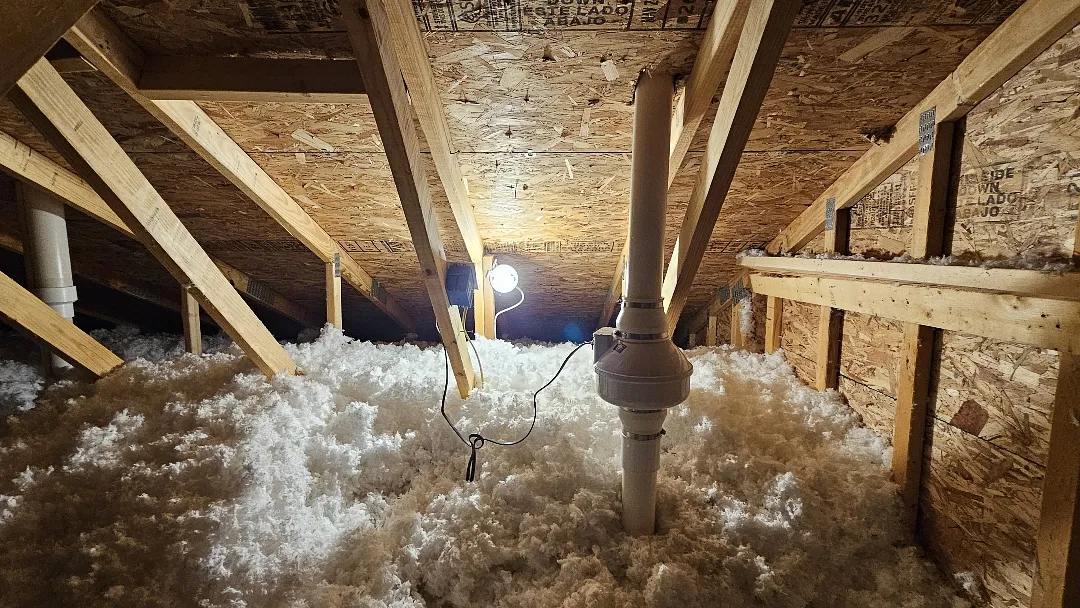
Good things:
- Works much better
- Can lower radon by 50-99%
- You can check it with a gauge
Not so good:
- Uses a small amount of power
- The fan will need to be replaced someday
Can a passive system become active?
Yes! Many new homes have a passive pipe. If a test shows high radon, we can add a fan. This turns it into an active system. It is often quick and easy because the pipe is already there.
Which one do you need?
Test your home first. If radon is still high with a passive system, it is time to add a fan.