
Short answer: A radon mitigation system uses a sealed pipe and an inline fan to pull radon gas from under your home's foundation and vent it safely above the roofline, before it can seep inside.
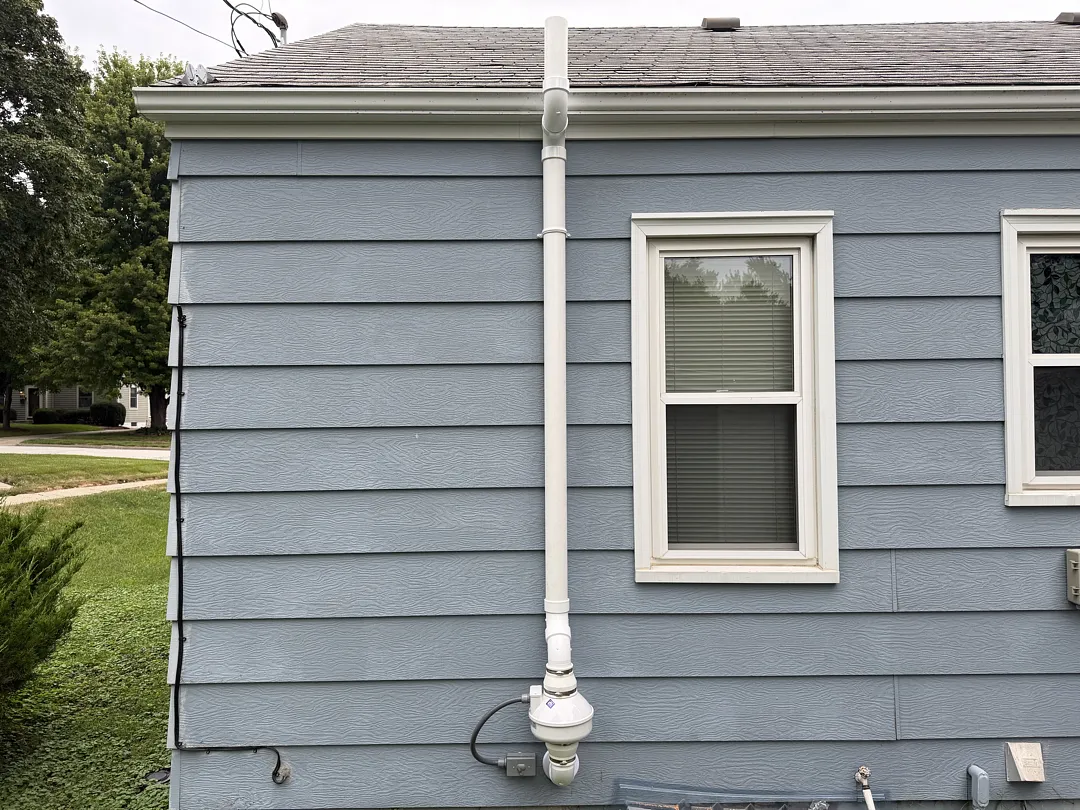
A radon mitigation system pulls radon out from under your home. It sends the gas outside, where it goes away safely.
The main parts
- The hole in the floor. We drill a small hole in your basement floor. This is called the suction point.
- The pipe. A pipe goes into the hole. The pipe runs up and out of your home.
- The fan. A special fan pulls air through the pipe. It runs all the time, day and night. Most radon fans are rated for continuous duty and typically last 5-10 years before they need to be swapped out.
- The gauge. A small gauge shows you the system is working. It is called a manometer.
- Radon gas sits in the dirt under your home.
- The fan pulls on the pipe, like drinking through a straw.
- The radon gets sucked into the pipe before it can come inside.
- The pipe sends the radon up above your roof.
- The gas mixes with outside air, and mitigates the home of radon.
How it works, step by step
We seal cracks too
We also seal big cracks and gaps in your floor with a urethane sealant or vapor barrier made for this job. This helps the system pull air evenly from under the whole slab instead of just near the suction point, so it keeps more radon out and helps the fan work less hard over time.
Does it work?
Yes. A good system can lower radon levels by 50-99%, often from well above the EPA's action level of 4 pCi/L down to 2.7 pCi/L or lower. We test your home after the system is put in to confirm it's working and give you documented results.