
Short answer: Since July 1, 2026, Iowa's HF 2297 requires new homes to be built with a passive radon system — gravel, sealed piping, and a vent stack — installed during construction. The law doesn't require a radon test, so buyers should still test the home after move-in.
Iowa has a new law about radon. It is called HF 2297. It started on July 1, 2026.
What does the law do?
New homes in Iowa now need a passive radon system built in while the home is being built. This makes it easier to fix radon later if the home needs it.
What goes into the system?
The system follows building rules called IRC Appendix BE. Builders add these parts:
- Gravel under the floor, so air can move
- Plastic sheeting on top of the gravel, to help block gas
- A pipe fitting under the floor, called a suction tee
- Sealing of cracks and joints in the floor
- A vent pipe that goes up and out through the roof
- An electrical outlet in the attic, ready for a fan later
- Labels on the pipe, so people know what it is
Does a passive system fix radon?
Not always. A passive system has no fan. It may help some, but it may not lower radon enough.
The law says the system must be put in. It does not say the home must be tested. That is why testing is still important, even in a brand new home.
What if my new home tests high?
Good news! Because the pipe and outlet are already there, we can add a fan. This turns it into an active system. It is usually faster and easier than putting in a whole new system.
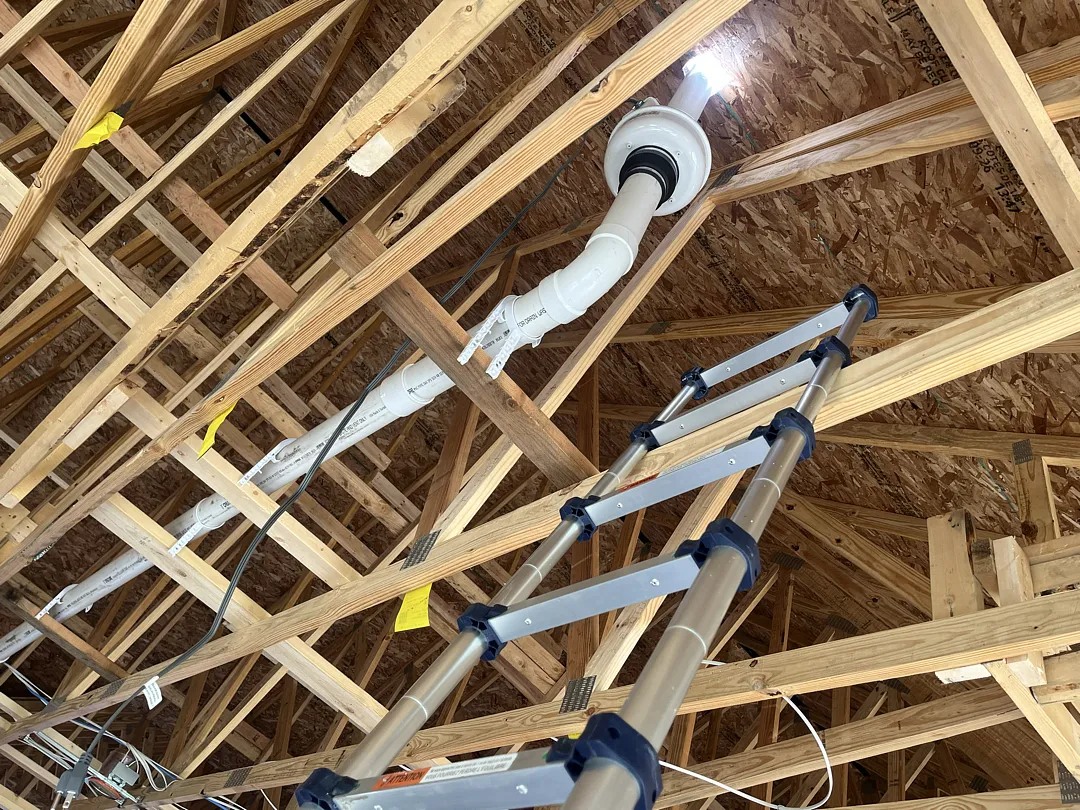
For builders
Central Iowa Radon helps builders meet the new law. We can help with planning, installing, and testing. We've already done this rough-in work for builders like Happe Homes.